An Anion Gap Calculator is a helpful medical resource that can estimate whether a person has an acid-base disorder, especially metabolic acid buildup. In kidney failure, this tool becomes particularly helpful because impaired kidney function can change electrolytes, lower bicarbonate, and increase the amount of unmeasured anions in the blood. The result is often a raised anion gap metabolic acidosis, but the pattern is not always straightforward.
For people reviewing a lab test result, the key is not just the number itself. The real value comes from medical interpretation: reviewing sodium, chloride, potassium, albumin, serum bicarbonate, and the broader picture of kidney function. This article explains how the anion gap works, why it changes in renal failure, and how albumin correction can make interpretation more accurate the lab data.
What the Anion Gap Measures
The anion gap is a computed result based on common electrolytes on a blood test. It shows the separation between measured positive and negative ions, mainly sodium and chloride, with bicarbonate also having an important role in the equilibrium. Because regular laboratory testing does not measure every charged particle in blood chemistry, the anion gap acts as a window into unmeasured anions.
In basic terms, the anion gap helps estimate whether extra acids are present. When the body accumulates acid or loses bicarbonate, the relationship among sodium, chloride, and bicarbonate changes. This is why the test is often used in assessing acid-base balance and identifying an acid-base disorder.
The anion gap is especially important in patients with renal impairment because the kidneys normally help regulate acid removal and electrolyte handling. When that process fails, the pattern on the blood test can shift in ways that reveal underlying illness. Although the calculator itself is easy, the clinical interpretation requires careful review of the entire set of laboratory values.
Potassium may also be added in some calculations, but many standard formulas focus on sodium, chloride, and bicarbonate. Regardless of the exact formula, the goal remains the same: to identify whether the blood chemistry suggests occult acids or an unexpected electrolyte imbalance.
How Kidney Failure Influences the Anion Gap
Kidney insufficiency often cause acid-base acidosis because impaired kidneys have trouble removing acid and restoring bicarbonate. As serum bicarbonate drops, acid accumulates in the body, and the anion gap may climb. This is common in both chronic kidney disease and acute kidney injury, though the pace and severity may change.
In kidney failure, the body holds onto acids that healthy kidneys would normally filter out. These retained acids often appear as uremia, a buildup of waste products that increases the acid load. As the condition worsens, uremic toxins and other acid-generating compounds rise, which can produce systemic acidosis and a higher anion gap.
At the same time, lowered bicarbonate production and increased bicarbonate loss intensify the disorder. Since bicarbonate is a major buffer, lower levels strongly influence the calculation. That is why the anion gap is commonly used as a diagnostic tool when evaluating patients with renal failure.
It is important to remember that kidney failure does not always cause a high anion gap. Some patients may have a normal gap depending on the phase of disease, treatment status, and whether other processes are present. Still, in many cases, kidney dysfunction is one of the most important causes of high anion gap metabolic acidosis.
In What Way the Anion Gap Calculator Functions
The Anion Gap Calculator applies a straightforward formula derived from measured clinical values. The typical version is:
Anion gap = Sodium − (Chloride + Bicarbonate)
Some versions add in potassium, but many clinical settings leave out it because the value is usually limited relative to sodium. The calculator takes the lab test result from a basic metabolic panel or related blood chemistry panel and gives the calculated gap.
Because albumin is a negatively charged protein in the blood, low albumin can mask a truly elevated gap. That is why the corrected anion gap is often preferable than the raw number. When albumin is low, the calculator may apply an albumin correction to better reflect the actual acid burden.
Using a calculator helps standardize clinical interpretation, especially when reviewing multiple laboratory values. Still, it should be viewed as a starting point rather than a final diagnosis. A high value suggests the presence of extra acids or another shift in blood chemistry, but the cause must be determined through the rest of the evaluation.
In practice, the calculator is especially useful when paired with the rest of the patient’s information: serum creatinine, bicarbonate, electrolyte trends, symptoms, and possible exposure to medications or toxins. This is what makes it an effective medical calculator rather than just a number generator.
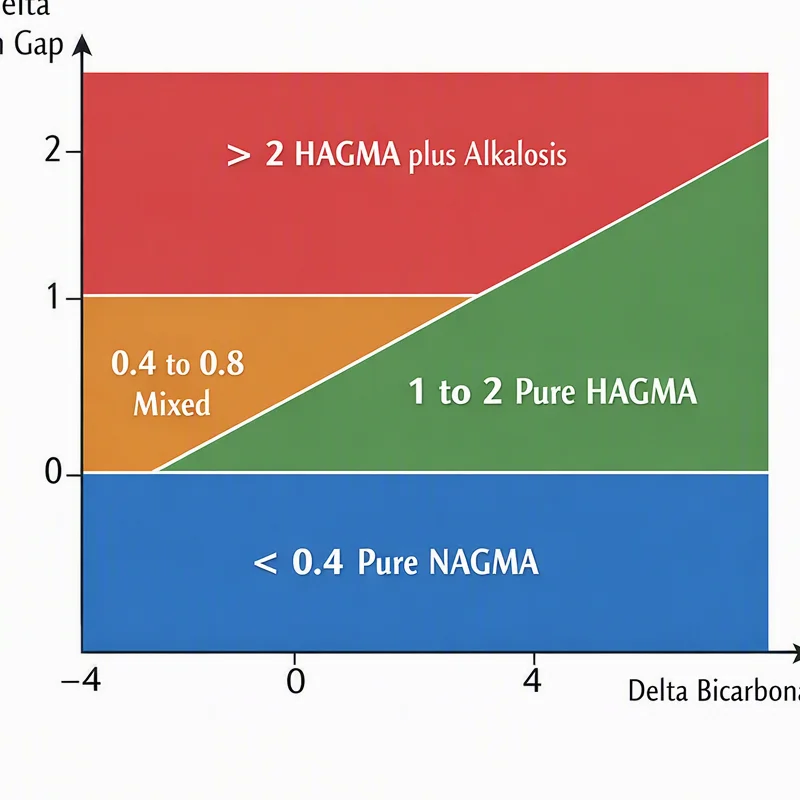
Typical, Elevated, and Low Anion Gap Values
The normal range for anion gap can change by laboratory because different methods and measurement systems are used. For that reason, the usual range should always be interpreted using the specific lab’s own values rather than a single universal cutoff.
A high anion gap usually suggests extra acids in the blood, including acids related to kidney failure, lactic acidosis, or ketoacidosis. In contrast, a reduced anion gap is less common and often reflects hypoalbuminemia, testing differences, or uncommon laboratory issues. A low result does not usually point to kidney failure by itself, but it can still affect the overall medical interpretation.
Because the gap is calculated from measured ions, even small changes in sodium, chloride, or bicarbonate can alter the result. That is why the number must be interpreted in the context of the full acid-base picture. A patient can have a modest gap change with major illness, or a large change that is partly explained by low albumin.
When reviewing a result, ask whether the value falls inside the lab’s stated normal range, whether the bicarbonate is low, and whether there are signs of acidosis. The pattern matters more than any single number.
Common Causes of Increased Anion Gap in Kidney Failure
Various issues can cause high anion gap metabolic acidosis in patients with kidney failure. Some are directly related to reduced renal clearance, while additional factors occur alongside the kidney problem and add more acid load.
Uremic buildup is among the clearest causes. As kidney function declines, waste products accumulate, leading to a higher anion gap. It is a classic feature of advanced kidney disease and worsening serum creatinine often supports the broader picture of declining kidney function.
Lactate buildup can also occur when tissues do not receive enough oxygen or when metabolism is severely stressed. Since lactate is an unmeasured anion, it increases the gap and can make acidosis more severe. In someone with kidney failure, lactic acidosis may coexist with uremia, intensifying the disorder.
Ketone-related acidosis is another important cause. This may happen in diabetes, starvation, or other states of impaired carbohydrate use. Ketones are unmeasured anions, so they raise the anion gap significantly. If kidney failure is present at the same time, the body has even less ability to buffer the acid load.
Poisoning exposures are also part of the differential diagnosis. Some substances produce a major high gap pattern and can overlap with kidney-related acidosis. This is one reason the calculator should never be used alone to make a diagnosis. The lab pattern is a clue, not the full answer.
In short, kidney failure may raise the anion gap directly through uremia, or indirectly by worsening the impact of lactic acidosis, ketoacidosis, or toxic ingestions. The more advanced the renal dysfunction, the more likely that multiple processes will be present at once.
In What Way Does Albumin Affects Interpretation
Low Albumin can lead to the anion gap appear incorrectly within normal limits or only slightly elevated. Since albumin contains negative charge, a lower serum albumin level decreases the measured gap even when unmeasured acids are present. This is why albumin correction is so important in kidney disease.
If it is not corrected, clinicians may miss a clinically significant acid-base disorder. That is especially true in patients with chronic illness, poor nutrition, inflammation, or advanced kidney disease, all of which can lower albumin. In these cases, the corrected anion gap gives a better picture of the underlying acid burden.
Albumin correction enhances laboratory interpretation by adjusting the expected gap upward when albumin is low. The exact correction method can change, but the concept is unchanged: if albumin decreases, the raw anion gap should not be trusted at face value. A “normal” result may still conceal a true high gap state.
This matters because kidney failure often appears alongside with other causes of low albumin. When reviewing a patient’s blood chemistry, it is helpful to look at albumin alongside bicarbonate and creatinine, not after the fact. The correction can change whether the result is viewed as normal, borderline, or clearly abnormal.
When to Use an Anion Gap Calculator
Employ an Anion Gap Calculator whenever there is a blood test or basic metabolic panel indicates an acid-base problem. It is especially valuable when bicarbonate is low, chloride is abnormal, or symptoms raise concern for acid-base disorders. In kidney failure, this is often considered part of routine monitoring https://anion-gap-test959.iamarrows.com/can-iron-overdose-increase-the-anion-gap rather than an occasional extra step.
The calculator is useful when evaluating:
- Reduced bicarbonate on a basic metabolic panel Likely metabolic acidosis in chronic kidney disease or acute kidney injury Unexpected electrolyte imbalance involving sodium, chloride, or potassium Suspected high anion gap metabolic acidosis from uremia, lactic acidosis, or ketoacidosis Situations where albumin may distort the raw calculation
It is also important in serial monitoring. If kidney function worsens and serum creatinine rises, trends in the anion gap and bicarbonate may signal progression before symptoms become obvious. That makes the calculator a practical part of ongoing clinical assessment.
Still, the calculator should support, not replace, a clinician’s judgment. The result needs to be matched with symptoms, medication history, kidney function, and other laboratory findings. This is especially true when the patient has notable renal impairment or multiple simultaneous causes of acidosis.
Limitations and Clinical Cautions
Although helpful, the anion gap has important diagnostic limitations. One concern is measurement error, which can occur because of specimen handling, analyzer differences, or unusual lab methods. Small numeric changes may not always reflect true physiology.
Another major issue is the presence of a mixed acid-base disorder. A patient with kidney failure might have metabolic acidosis plus another process, such as vomiting, respiratory compensation issues, or toxin exposure. In that setting, the anion gap alone may not fully describe the disorder.
Altered albumin, altered sodium, and low or high chloride can all distort the calculation. That means the same gap value may mean different things in different patients. Therefore, good medical evaluation should include the full clinical context, not just the calculator output.
The result should also be interpreted together with serum creatinine, bicarbonate, potassium, symptoms, and the overall trend in kidney function. A single value is less informative than a pattern over time. If the result is unexpected, repeat testing may be necessary to rule out error or transient changes.
Finally, keep in mind that the calculator does not diagnose the cause of acidosis. It helps refine the differential diagnosis, but it does not distinguish uremia from lactic acidosis, ketoacidosis, or toxic ingestions on its own. That distinction requires broader clinical workup.
Common Questions on Anion Gap and Kidney Failure
How is defined the anion gap in kidney failure?
The anion gap is a computed value that helps assess metabolic acidosis and acid-base balance in kidney failure. It shows the difference between measured electrolytes, mainly sodium, chloride, and bicarbonate, and helps reveal the presence of unmeasured anions. In kidney disease, it is often used to spot high anion gap metabolic acidosis caused by uremia or other acid-producing conditions.
How do you calculate the anion gap?
The most common anion gap formula is sodium minus the sum of chloride and bicarbonate. Some formulas also include potassium, but that is used less often. An Anion Gap Calculator can perform the calculation automatically from a basic metabolic panel or other blood chemistry results.
What makes the anion gap high in kidney failure?
The anion gap may be high in kidney failure because the kidneys cannot remove acids effectively, leading to uremia and metabolic acidosis. It can also rise when lactic acidosis, ketoacidosis, or toxic ingestions are present. These conditions contribute unmeasured anions to the blood and increase the gap.
When should albumin be adjusted when interpreting the anion gap?
Yes. Albumin correction is often important because low albumin can make the gap look falsely normal. In patients with reduced albumin, the adjusted anion gap offers a more accurate assessment of the acid burden. This is especially relevant in kidney disease, where albumin may be low for multiple reasons.
When should a doctor evaluate an abnormal anion gap result?
A doctor should assess an abnormal result when the gap is high or unexpectedly decreased, when bicarbonate is reduced, or when symptoms point to an acid-base disorder. Timely medical evaluation is especially important if there is kidney failure, worsening serum creatinine, or concern for lactic acidosis, ketoacidosis, or toxic ingestion. A clinician can determine whether the pattern reflects renal failure, another cause, or a mixed disorder.
Overall: An Anion Gap Calculator is most useful in kidney failure when paired with albumin correction, careful review of laboratory values, and an understanding of the patient’s broader clinical picture. The number itself is meaningful, but the best results come from thoughtful interpretation of the whole blood test and the underlying kidney disease.